
Last updated October 15, 2026
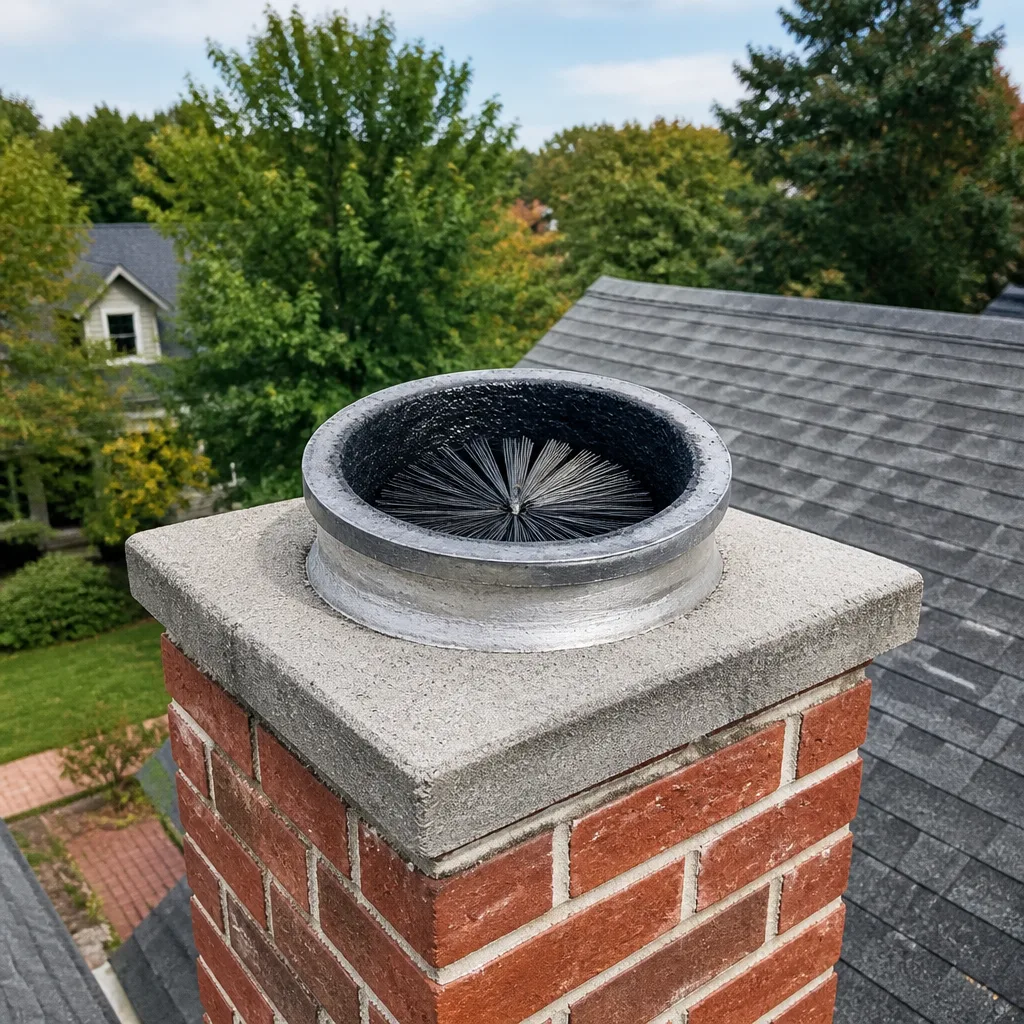 Sweep & inspection
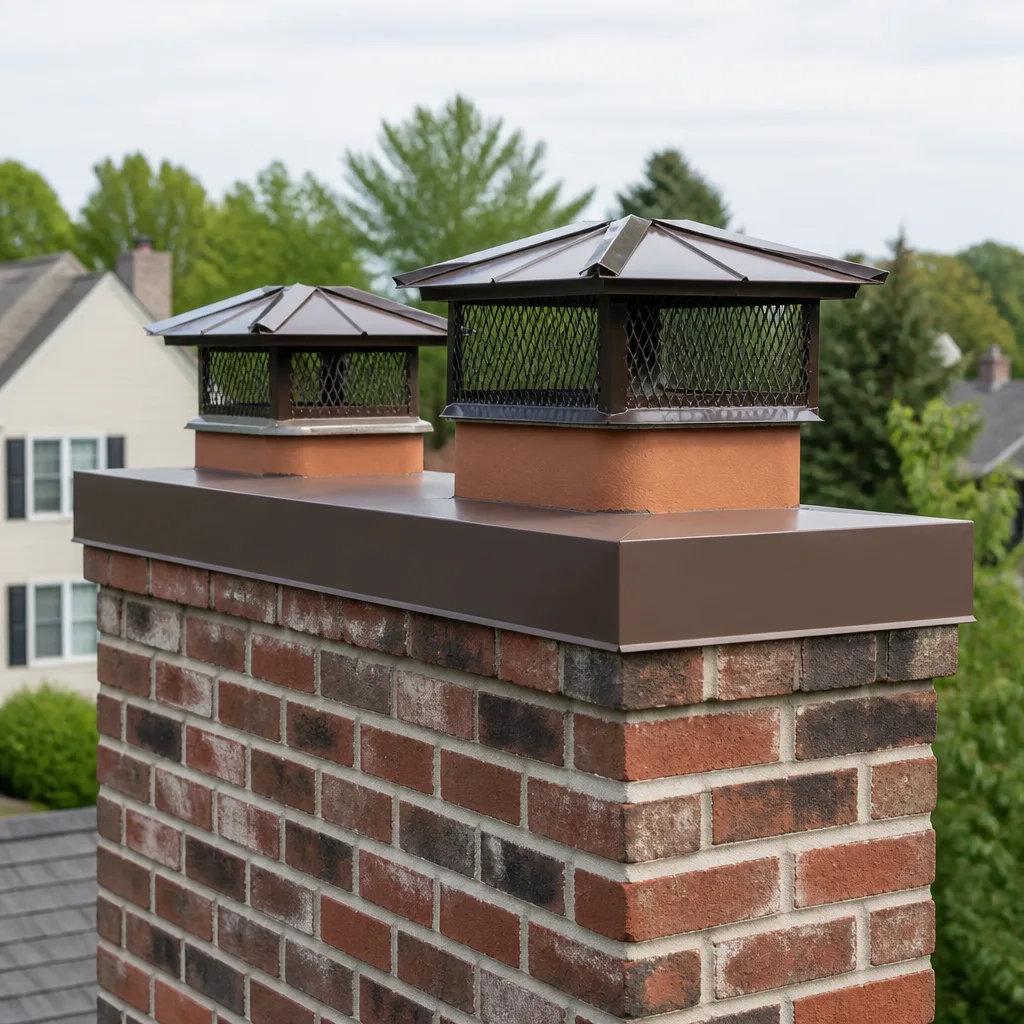 Caps & crowns
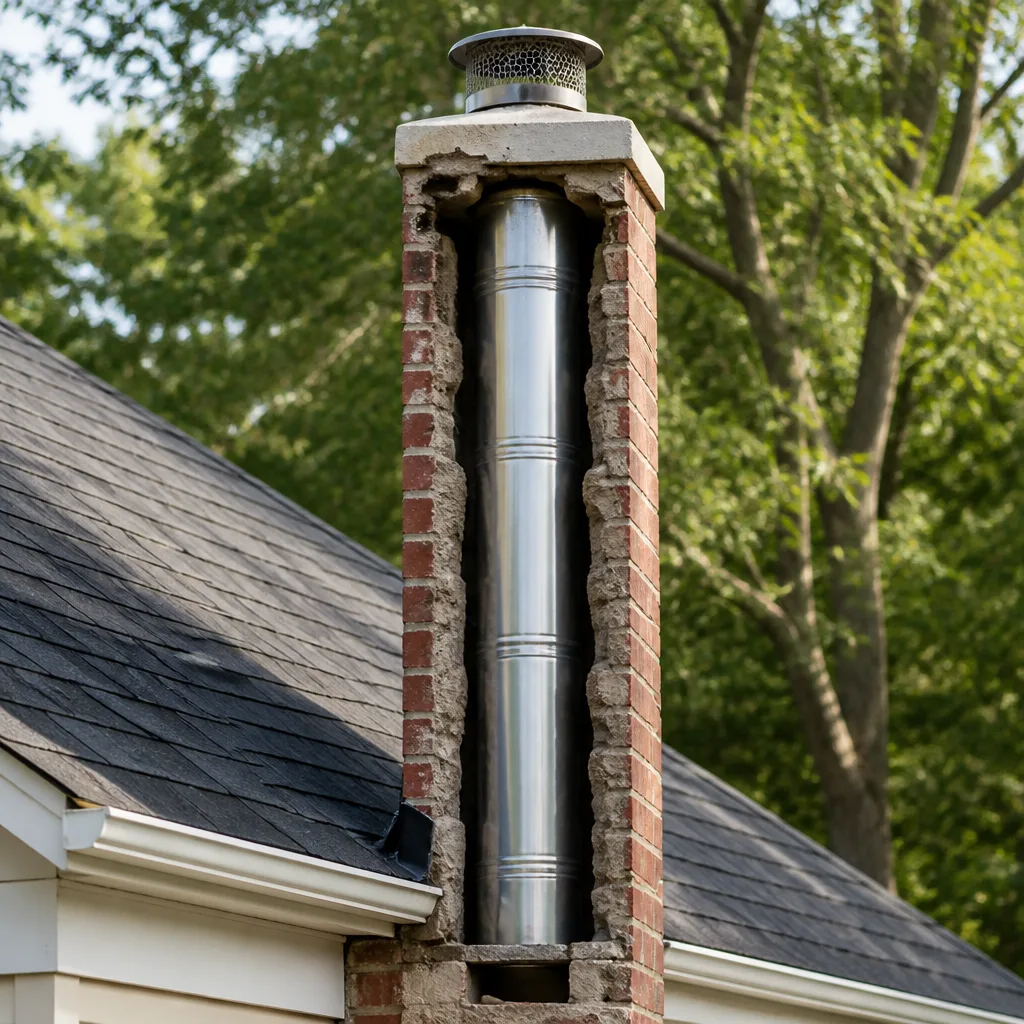 Flue relining
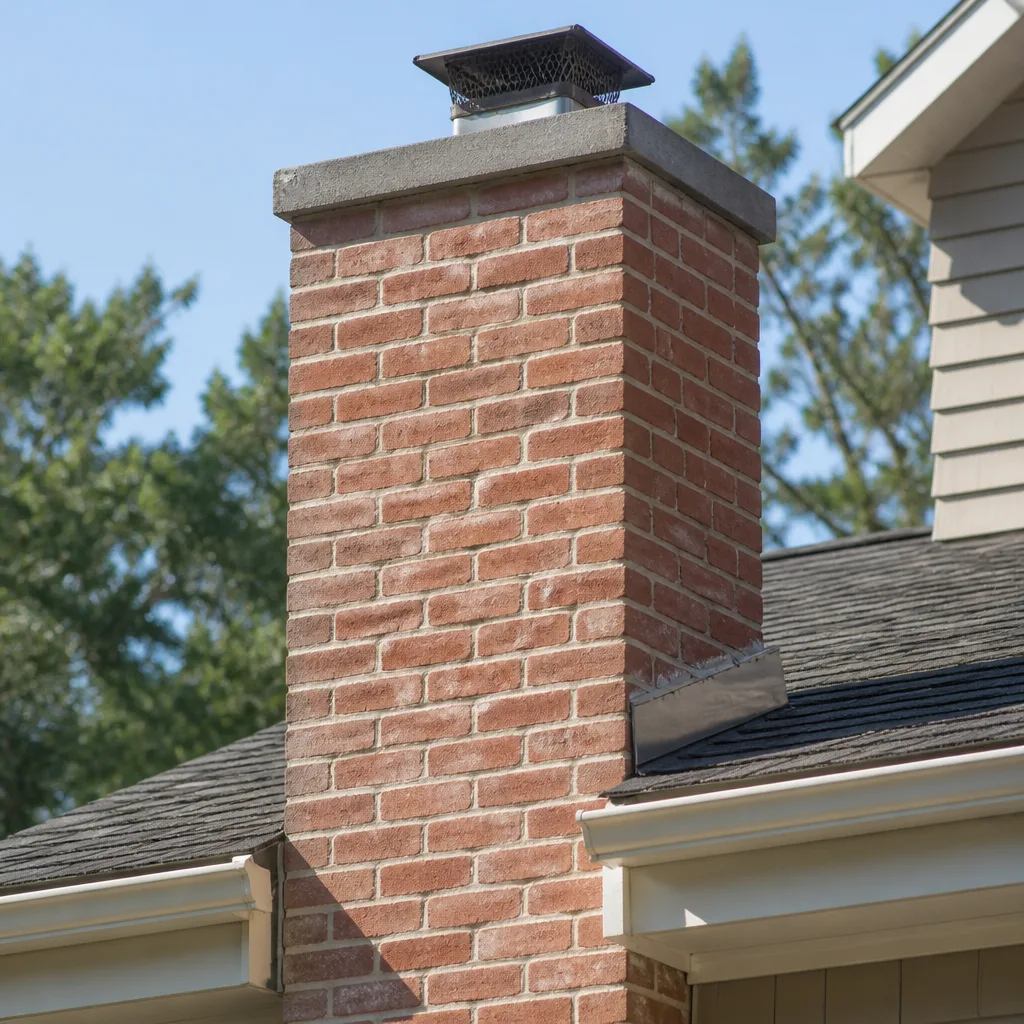 Masonry repair
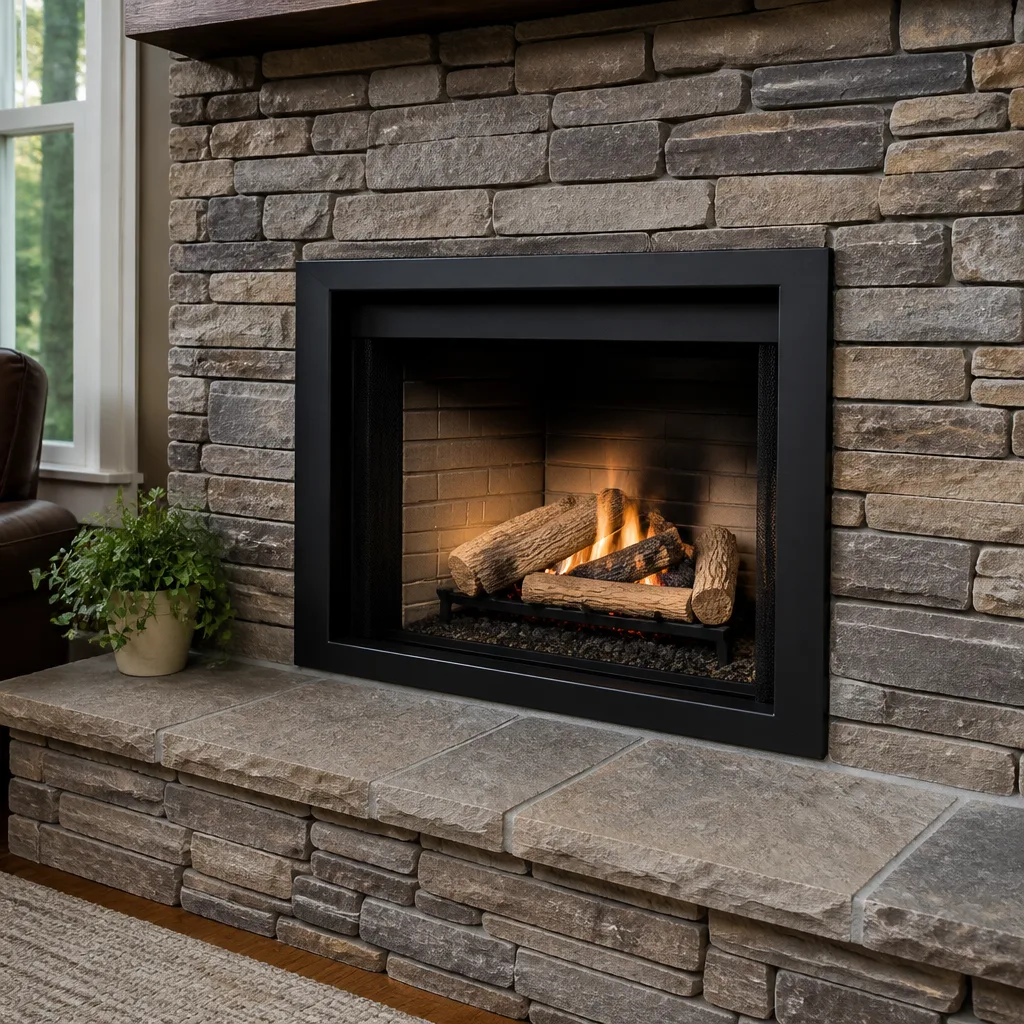 Gas fireplace service
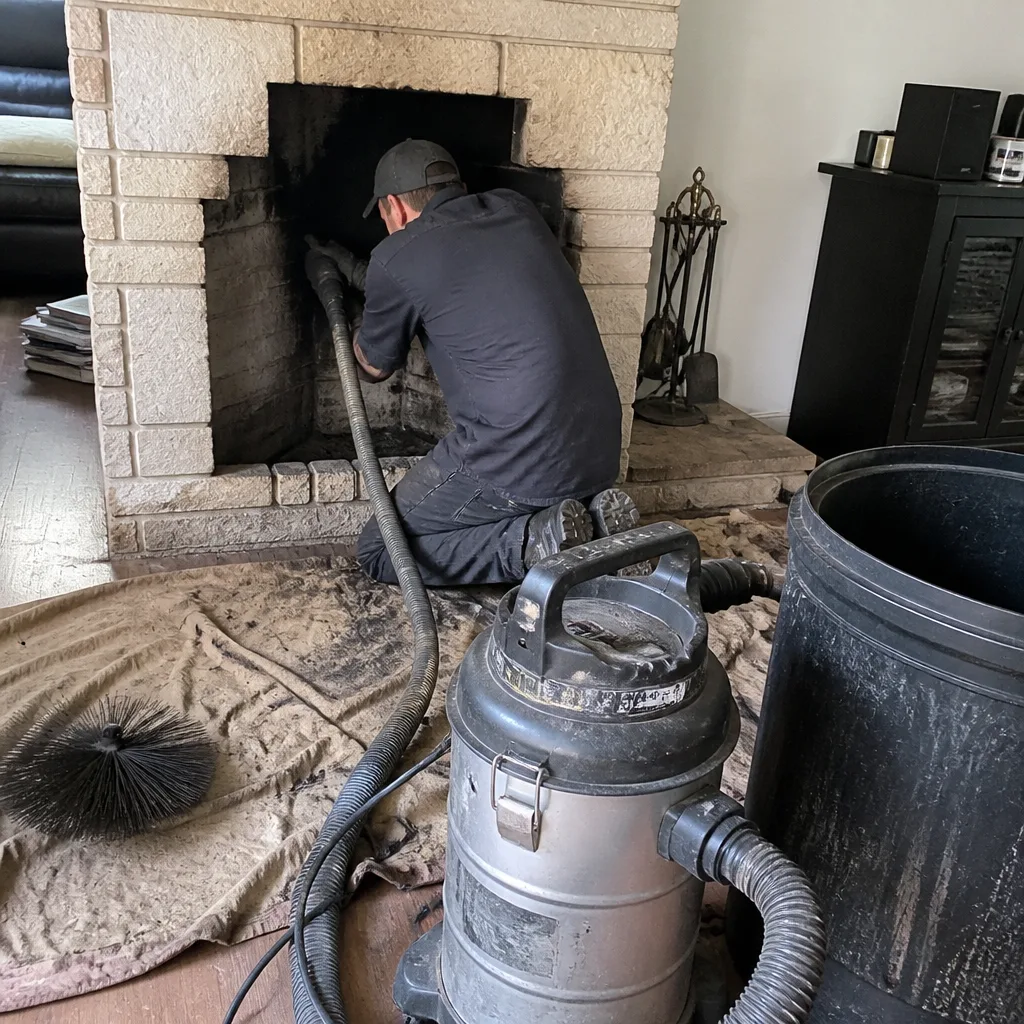
Level 1 sweep and inspection to the NFPA 211 annual standard - flue, crown, cap, and flashing checked and photographed
Chimney sweep logs do not sweep chimneys. They loosen some creosote - which then falls where a brush and vacuum still have to collect it.
Seasonal Chimney Cleaning Care for Fort Lauderdale: Year-Round Homeowner’s Guide
Fort Lauderdale averages fewer than 10 fireplace-burning nights per year, yet your chimney takes weather abuse 365 days straight. The salt air, the humidity that never quits, the afternoon downpours, and the occasional hurricane all work on your flue while you’re not thinking about it. This guide replaces the fall-and-spring advice from northern chimney sources with a schedule that actually fits South Florida. You’ll learn when to clean, what to inspect after storms, and why the off-season does most of the damage in Fort Lauderdale.
Quick Answer
Seasonal chimney care in Fort Lauderdale is not about temperature, it’s about moisture, storms, and a burn window that lasts roughly eight weeks from late December through mid-February. The most important work happens in summer and early fall, when standing humidity and organic growth inside an unused flue cause the most deterioration. Schedule your annual sweep and inspection in October or November, before the holiday burn window, and always check the chimney after any named storm passes within 100 miles of Fort Lauderdale.
Styles & brands we work with
Table of Contents
- Why Fort Lauderdale’s Chimney Calendar Is Backwards
- Summer: The Highest-Risk Season Nobody Thinks About
- Pre-Storm: What to Check Before Hurricane Season Peaks
- Post-Storm: What to Inspect After Any Named Storm
- The Eight-Week Burn Window: Timing Your Cleaning Right
- Why a Fireplace Used Five Times a Year Needs More Care, Not Less
- Season-by-Season Task List for Fort Lauderdale Homeowners
- Common Mistakes to Avoid
- When to Call a Professional
- Frequently Asked Questions
- The Bottom Line
Why Fort Lauderdale’s Chimney Calendar Is Backwards
Most chimney advice written for the American homeowner assumes you live somewhere with four seasons, freezing temperatures, and a fireplace that runs from October through April. That advice falls apart in Fort Lauderdale. Here, the chimney faces its harshest conditions during the months when nobody is using it. The heat and humidity of a South Florida summer push moisture into masonry and clay flue liners. The daily thunderstorms saturate the crown and cap. And the salt air, carried inland from the Atlantic, accelerates corrosion on any metal component. All of this happens while the fireplace sits dark and cold.
Understanding this backwards calendar is the whole job. The goal in Fort Lauderdale is not to prepare a chimney for heavy winter use. The goal is to keep the flue structurally sound and moisture-free through eleven months of disuse so it works safely on the handful of nights you actually light a fire. That changes when you clean, what you look for, and how often you inspect.
Summer: The Highest-Risk Season Nobody Thinks About
In northern climates, summer is the off-season, a time when chimney professionals relax and homeowners forget the fireplace exists. In Fort Lauderdale, summer is when the real damage happens. Sustained humidity levels above 70 percent combined with daily rainfall and temperatures in the high 80s and 90s create an environment where moisture never fully evaporates from a flue. Water that sits inside a clay liner or between flue tiles for weeks at a time does more harm than a full winter of freeze-thaw cycles up north.
Here’s what we’ve seen in Fort Lauderdale summers. Efflorescence, the white chalky mineral deposits on brick, appears on exterior chimneys and spreads quickly when masonry stays damp. Inside the flue, creosote that may have built up from just a few holiday fires absorbs moisture and turns into a sticky, acidic compound that eats at mortar joints. In chimneys with original clay liners, the combination of heat expansion and moisture intrusion causes spalling, where the inner surface of the tile flakes away. And in shaded neighborhoods like Victoria Park and Riverside Park, organic growth inside the flue, including moss and mildew, is common by August. None of this is visible from the living room.
We’ve done chimney inspections in Fort Lauderdale where a flue looked serviceable in March and showed significant liner deterioration by September. The damage had nothing to do with burning. It was moisture, time, and heat. This is why we tell homeowners that summer is not the season to ignore the chimney. It’s the season when the next repair bill is being created.
What Summer Does to a Chimney in Fort Lauderdale
- Chimney crown saturation. The crown is the concrete slab on top of the chimney that sheds water away from the flue. Tiny cracks in the crown allow rain and humidity to penetrate the chimney structure. In Fort Lauderdale’s summer, those cracks stay wet for months. The water migrates down through the brick and mortar, weakening the structure from the inside.
- Flue liner degradation. Clay tile liners absorb moisture. When the chimney gets hot, either from a brief fire or direct sun on the exterior masonry, that trapped moisture expands and contracts. Over time, the tiles crack. A cracked liner is the single most common repair we make on Fort Lauderdale fireplaces, and most of those cracks trace back to summer moisture, not winter use.
- Damper and metal component corrosion. Salt air is a fact of life in Fort Lauderdale. The damper, which sits just above the firebox and controls airflow, is usually made of cast iron or steel. Summer humidity plus salt accelerates rust, and a rusted damper either seizes shut or fails to seal properly, letting conditioned air escape up the flue year-round.
- Organic growth. Standing moisture inside an unused flue creates a perfect environment for mold, mildew, and moss. This is more than a cosmetic issue. Organic material inside the flue is a fire hazard and can produce odors that permeate the house.
Pre-Storm: What to Check Before Hurricane Season Peaks
Hurricane season in Fort Lauderdale runs from June 1 through November 30, with peak activity between mid-August and mid-October. The weeks before that peak window are the right time to give the chimney a thorough look. You don’t need to wait for a named storm to be tracking toward the coast. The pre-storm check is about making sure the chimney can handle heavy wind and rain without turning into a leak source or a projectile risk.
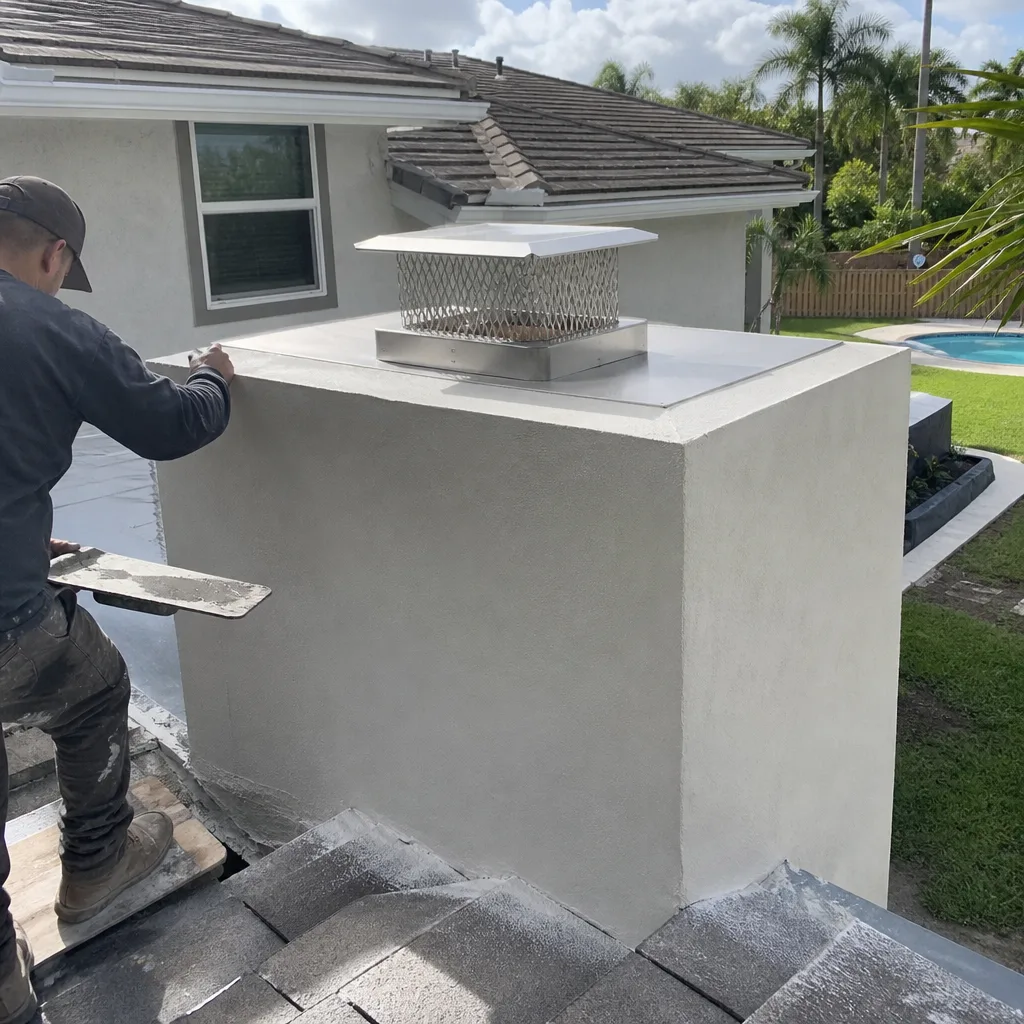
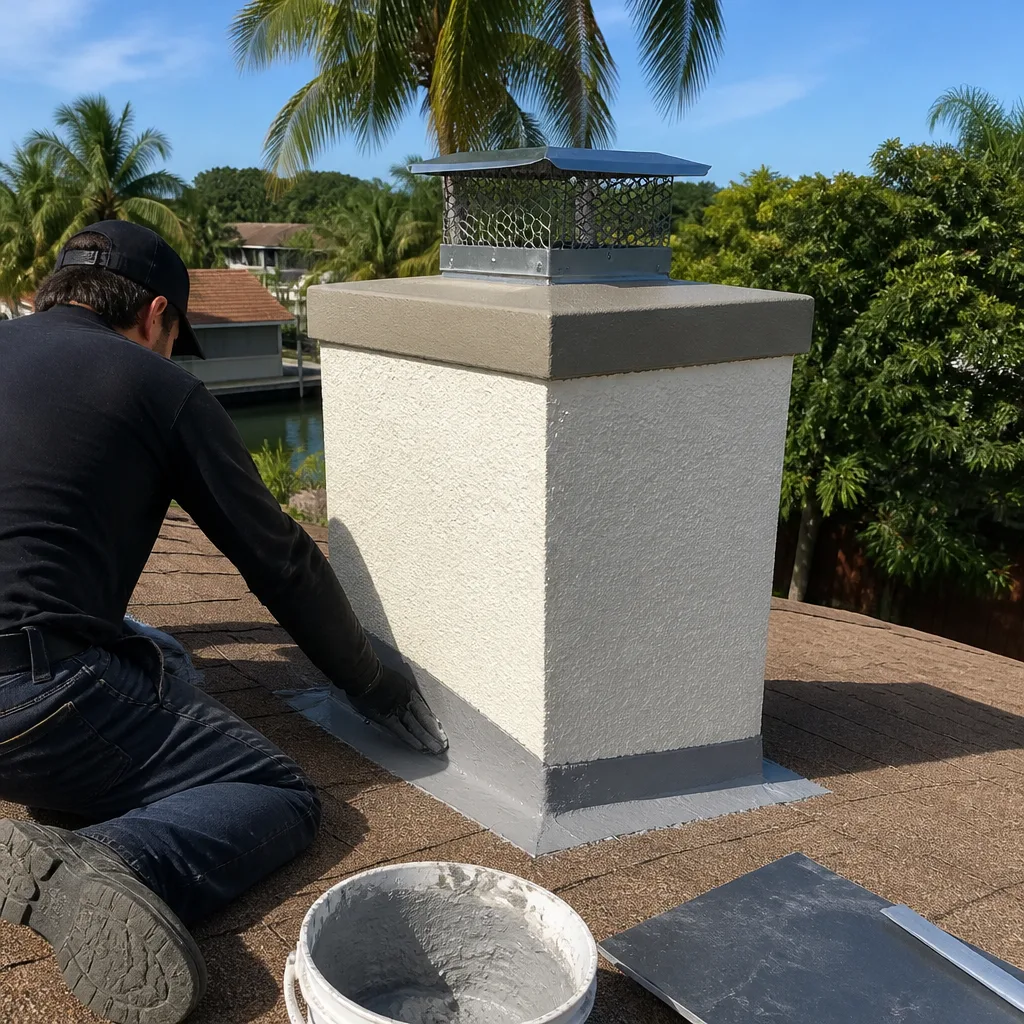
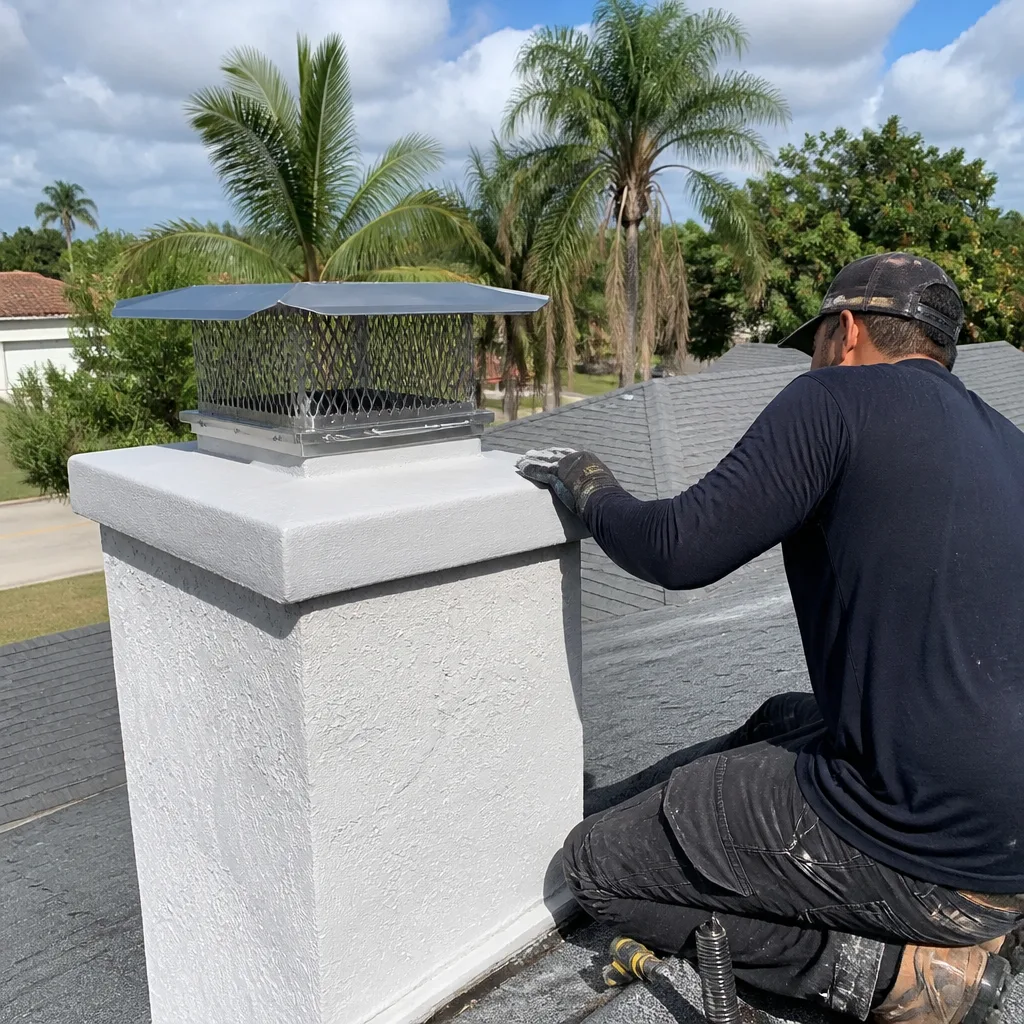
The most important components to check before storm season are the chimney cap, the crown, and the flashing. The cap sits over the flue opening and does two jobs: it keeps rain and debris out of the flue, and it contains sparks during a fire. In Fort Lauderdale, caps take a beating from wind and salt. A loose or rusted cap can lift off in a storm, leaving the flue wide open to driving rain. The crown should have no visible cracks, and the flashing, the metal seal where the chimney meets the roof, should be tight with no gaps. Loose flashing is one of the most common sources of water intrusion in Fort Lauderdale homes, and the damage often shows up as a ceiling stain in the room below the chimney.
We also recommend clearing any debris that has accumulated against the chimney exterior. Palm fronds, leaves, and branches that sit against masonry hold moisture against the brick. Before a storm, clear those away. And if you have an older cap, or no cap at all, replace it now. A new cap costs a fraction of what water damage restoration costs after a storm.
Post-Storm: What to Inspect After Any Named Storm
Any named storm that makes landfall within 100 miles of Fort Lauderdale warrants a chimney check, even if your home had no obvious damage. Wind-driven rain can enter a flue at angles that ordinary rain never reaches. Debris can land on the crown and chip it. Shifting roof materials can pull at the flashing. And in older Fort Lauderdale homes, particularly in neighborhoods like Sailboat Bend and Tarpon River where many chimneys date back to the 1940s and 1950s, masonry that has already been weakened by years of humidity can shift in high winds.
Walk through this checklist after any significant storm:
- Look at the cap. Use binoculars from the ground or get on a ladder if you’re comfortable and safe. Is the cap still squarely seated? Any tilt, rust, or missing screen means it’s time for a replacement.
- Check for water inside the firebox. After a heavy storm, open the damper and inspect. If you see water, even a small puddle, the cap or crown failed somewhere. Water inside the firebox after a storm is the clearest sign that the flue is not sealed.
- Look for ceiling stains or peeling paint near the chimney chase. Water that gets past the flashing travels down inside the wall. The first sign is often a brown ring on the ceiling or bubbling paint on a wall adjacent to the chimney.
- Listen. With the damper closed, stand near the fireplace during the next windy day. Whistling or rattling suggests the damper is loose or the cap is misaligned.
- Smell. After a storm, a musty or earthy smell coming from the fireplace is a sign of moisture and possibly organic growth inside the flue.
If you find water, smell anything unusual, or just want a professional look after a big storm, a chimney inspection in Fort Lauderdale costs less than the repair bill you’ll face if a small leak is allowed to sit. In our experience, most post-storm problems start small and get expensive when they’re ignored.
The Eight-Week Burn Window: Timing Your Cleaning Right
Fort Lauderdale’s actual fireplace-burning season runs from roughly the third week of December through the second week of February. That’s eight weeks, and most homeowners will light a fire fewer than five times in that stretch. But those are the nights everyone wants the fireplace to work, whether it’s Christmas Eve in Rio Vista, New Year’s Day in Coral Ridge, or a rare cold front that drops the temperature into the 40s anywhere in the city.
The mistake we see every year is waiting until December to call about a cleaning. By the time the first genuinely cold night arrives, a good chimney sweep in Fort Lauderdale is already booked solid through the holidays. Worse, if the sweep uncovers a problem, like a cracked liner or a damaged damper, there’s no time to fix it before the burn window closes.
The right time to schedule a cleaning is October or November. This gives the technician time to do a proper job, lets you review any findings without time pressure, and ensures the fireplace is ready the day you want it. It also means any creosote, which is the sticky residue left by burning wood, gets removed before it has another humid summer to turn acidic and eat away at the liner.
If you’ve missed that window and it’s already December, don’t skip the cleaning. A fireplace that hasn’t been cleaned in years can still be unsafe, and better late than never. But understand that scheduling flexibility is tight, and a January cleaning is still better than burning in a dirty flue because you couldn’t get on the schedule in December.
Why a Fireplace Used Five Times a Year Needs More Care, Not Less
This is the counterintuitive part of chimney maintenance in Fort Lauderdale, and it’s worth understanding. A fireplace that burns wood every weekend in a northern climate generates creosote, sure, but it also dries out the flue. The heat from regular fires evaporates moisture and keeps the liner from staying damp for long periods. The homeowner who burns weekly gets their chimney swept regularly because they know they’re using it. They stay on top of it.
A Fort Lauderdale fireplace that’s lit five times a year faces a different problem. It sits idle for 11 months. Every day of those 11 months, the flue is exposed to humidity, salt, and heat. Moisture absorbs into the masonry and sits there. Any small crack gets worked wider by thermal expansion from direct sun. And because the fireplace is rarely used, the owner rarely thinks about it. The result is that the chimney deteriorates silently, and the first time anyone notices is either a water stain on the ceiling or a failed inspection when the house is being sold.
Here’s the maintenance logic that applies specifically to South Florida: the less you use your fireplace, the more important the annual inspection becomes. You’re not inspecting for creosote buildup from heavy use. You’re inspecting for moisture damage, liner cracking, cap failure, and organic growth, the things that happen when a chimney sits unused in a hot, wet climate. An annual chimney inspection in Fort Lauderdale on an unused fireplace is not overkill. It’s the only way to catch problems before they become structural.
Season-by-Season Task List for Fort Lauderdale Homeowners
Here’s the full year, broken into the five seasons that actually describe a Fort Lauderdale chimney calendar. Each task is realistic for a homeowner who is reasonably handy but not a masonry expert.
Summer (June through August): Moisture Defense
Time required: about 2 hours total over the summer.
- Check the chimney cap from the ground with binoculars. Look for rust, tilt, or missing screens. This is the single most important summer check.
- After a heavy afternoon thunderstorm, look up at the chimney exterior. Does the brick look darker in patches? Persistent dark patches after rain suggest the masonry is absorbing water.
- Check the damper. Open and close it. If it sticks, creaks, or won’t seal fully, note it. A damper that doesn’t seal is letting humid outside air into the house, which means your AC is working harder.
- Smell the fireplace on a humid day. Any musty odor means moisture is sitting somewhere in the flue. Don’t ignore it.
- If you have an outside air intake or an ash dump door, open it and check for debris or signs of pest entry.
Pre-Storm (September through early October): Storm Hardening
Time required: about 1 hour.
- Inspect the crown. From the roof if you’re comfortable with roof work, or from a ladder at the eave line. Look for hairline cracks. If you can see cracks with your bare eyes, water can get in.
- Check the flashing where the chimney meets the roof. The metal should be tight against both surfaces with no gaps and no lifted edges. If it’s loose, call for a repair before storm season peaks.
- Clear debris from around the chimney exterior. Palm fronds, leaves, and branches hold moisture against brick for months.
- If the chimney lacks a cap, install one before the next rain. This is the cheapest protection you can buy for the flue.
- Book your annual sweep and inspection. This is the time of year when scheduling is flexible and you can get on the calendar without waiting.
Post-Storm (within 72 hours after any named storm passes within 100 miles): Damage Check
Time required: about 30 minutes.
- Look at the cap from the ground. Is it still there? Is it tilted?
- Open the fireplace and look inside the firebox. Any water, debris, or soot that washed down suggests the flue was exposed.
- Check the ceiling and walls around the chimney for new stains or paint bubbling.
- Go outside and look at the brick. Fresh cracks, displaced bricks, or a lean that wasn’t there before are serious signs. Call a professional immediately if you see any of them.
- If anything looks off, schedule an inspection. Water intrusion that’s addressed in the first week is a minor repair. The same water after two months is a major one.
Pre-Burn (November through mid-December): Safety Check and Loading
Time required: varies, but schedule the pro visit for now.
- Complete the annual chimney sweep in Fort Lauderdale if you haven’t already. This removes creosote, debris, and any nesting material from the flue.
- If the sweep or inspector recommends repairs, like a liner repair using HeatShield or a new cap from Gelco, schedule the work now. Don’t wait until the week before Christmas.
- Test the damper one last time. It should open and close smoothly and seal completely when closed.
- Bring in firewood. In Fort Lauderdale, where burning season is short, a small pile is all you need, but the wood should be seasoned and dry. Green wood burns cooler and produces more creosote, even in a single fire.
- Test the fireplace once before the holidays. Light a small fire, not to heat the house but to confirm everything works. It’s better to find out in November than on Christmas Eve.
Post-Burn (late February through May): Dormancy Prep
Time required: about 45 minutes.
- After your last fire of the season, let the ashes cool completely, then remove them. Ash in Fort Lauderdale, a name suited to the work, is acidic and holds moisture. Leaving it in the firebox all summer accelerates rust on the grate and the damper.
- Close the damper completely. This seals the flue against summer humidity, which is the number one cause of off-season deterioration.
- Do a final visual check inside the firebox. Anything that looks cracked, loose, or rusted should be noted for the next inspection.
- If you noticed any odor, moisture, or water stains during the burn window, don’t wait until fall to address them. A spring inspection finds problems before the hot, wet summer provides the conditions for them to worsen.
Common Mistakes to Avoid
- Waiting until December to book a sweep. Fort Lauderdale’s burn window is short, and good chimney companies are busy. In our experience, November schedules fill quickly. Booking in October gives you flexibility and leaves time for any necessary fireplace repair in Fort Lauderdale before the holidays.
- Thinking an unused fireplace doesn’t need service. In Fort Lauderdale, the unused months are when the damage happens. Moisture, salt, and heat work on the chimney year-round, and the owner who never uses the fireplace is the one who never notices until it’s expensive.
- Ignoring a musty smell coming from the fireplace. That smell means moisture and likely organic growth inside the flue. It will not go away on its own, and it will get worse through the summer. It also means the flue has a moisture source that needs to be found and sealed.
- Skipping the cap because it’s an extra cost. The cap is the single most important piece of protective equipment on a Fort Lauderdale chimney. A quality cap from a brand like Gelco costs a fraction of what a water-damaged liner or ceiling repair costs.
- Not checking after storms because the roof looks fine. Wind-driven rain enters a flue at angles that leave the roof untouched. A chimney can take significant water while the shingles look perfect. The only way to know is to check the firebox after the storm.
- Treating a chimney inspection as a formality. Some homeowners think an inspection is a quick look that checks a box. A proper inspection is the difference between catching a cracked flue liner in year one and paying for major masonry repair in year five. We use camera inspections and photo reports so you can see exactly what we see, whether it’s a HeatShield liner candidate or a clean flue that needs nothing.
- Burning green or wet wood. In a humid climate, wood left outside absorbs moisture even if it’s covered. Wet wood burns cooler and produces more creosote, which then sits in the flue for eleven humid months. Season your wood under cover and bring it inside a few days before burning.
When to Call a Professional
Some chimney issues are obvious and urgent. If you see water inside the firebox after a storm, hear debris falling when you close the damper, or notice a crack running through the brick work, get on the phone. Same if you smell something burning even when there’s no fire, which can indicate creosote buildup or an animal nest. A leaning chimney, fresh cracks after a storm, or a cap that has visibly shifted are all signs that you need professional eyes before the next rain. Ashby Chimney Fort Lauderdale offers free estimates in Fort Lauderdale. Call (754) 354-1451 and we’ll look at the chimney, tell you what we find, and give you a written price before any work starts.
Frequently Asked Questions
A chimney in Fort Lauderdale should be swept once a year, even if the fireplace is used only a handful of times. The sweep removes creosote, but just as importantly, it gives the technician a chance to check for moisture damage, organic growth, and cap or liner issues that develop during the long off-season. If you burn more than a cord of wood per year, which is rare in South Florida, you may need a second cleaning mid-season.
Most chimney sweeps in Fort Lauderdale run between $180 and $340 depending on the condition of the flue, the height of the chimney, and whether the fireplace has been recently serviced. That price should include a full flue brushing and a basic safety check. We give a written price before the work begins so there are no surprises on the invoice. Call (754) 354-1451 for an exact quote.
You might not know you need a new liner until a camera goes up the flue, because a liner can be cracked and still appear to work during a fire. The danger is invisible: cracks in a clay liner allow heat and gases to reach the surrounding masonry, which can lead to a chimney fire or carbon monoxide entering the home. We never recommend a liner repair without camera evidence you can see for yourself. If the liner is cracked, options like HeatShield resurfacing can often address the problem without a full rebuild.
In Fort Lauderdale, the most likely consequence is water damage that goes unnoticed for months. A cracked crown or a loose cap lets rain into the chimney, and the moisture works its way into the masonry, the ceiling, and the walls around the chimney. By the time you see the stain on the ceiling, the damage is already done, and the repair is far more expensive than the inspection would have been. A skipped inspection also means you’re burning in a flue whose condition you’re guessing at, and that’s a risk no one should take.
You can clear ashes from the firebox and wipe down the visible brick around the fireplace opening, but cleaning a flue properly requires brushes, rods, a vacuum with a HEPA filter, and access to the roof, which is dangerous work. We recommend leaving the flue itself to a trained chimney sweep who can also spot liner damage and other problems while the flue is being cleaned. The view from the roof in Fort Lauderdale, where most chimneys are low and access is often tight, is not worth a fall or a missed crack.
Yes, and millions of South Florida homes have working fireplaces. The key is proper maintenance and clean, seasoned wood. A clean chimney, a functional damper, and a cap that keeps rain out are all you need for safe, occasional burning. Just remember that the work isn’t in the eight weeks you’re burning. It’s in the eleven months you’re not.
The Bottom Line
Fort Lauderdale’s chimney care calendar is built around moisture, not cold. The summer and early fall months, when the fireplace sits unused, are when humidity and salt and standing water do the most damage. The eight-week burn window from late December through mid-February is a short and happy stretch that only works safely if the chimney was cleaned and inspected before it arrived. Book your sweep in October or November, check the cap and flashing before and after storm season, and never assume an unused fireplace is a healthy fireplace. The maintenance is counterintuitive, but it’s simple once you understand the calendar.
If you need a chimney cleaning, inspection, or repair in Fort Lauderdale, we’re easy to reach. Call (754) 354-1451 and a live person answers. We’ll give you a written price before the work starts and a written guarantee when it’s done. That’s the Kingswell Way, and it’s how we’ve operated since 2002.
Written by Nathan Corliss, Owner at Ashby Chimney Fort Lauderdale, serving Fort Lauderdale since 2002.
See the difference
 Before
 After
After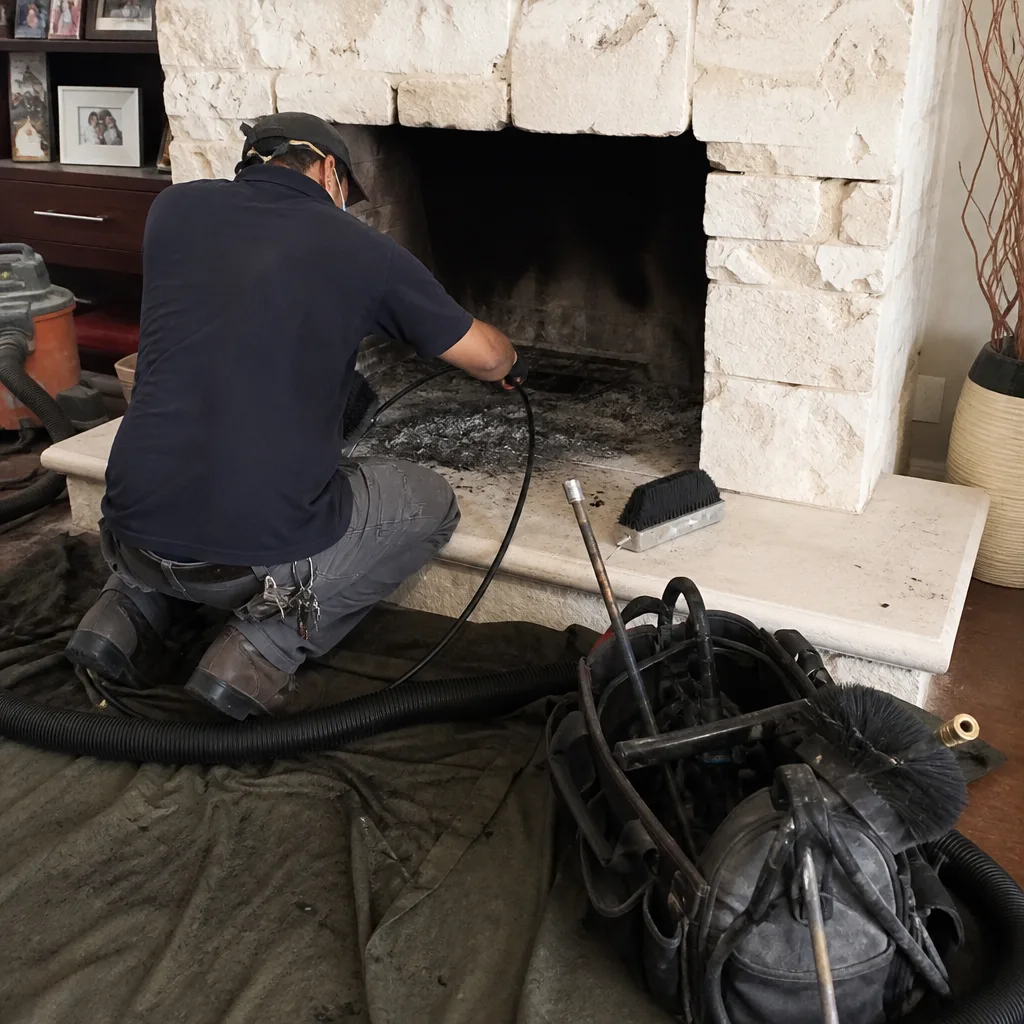 Before
 After
After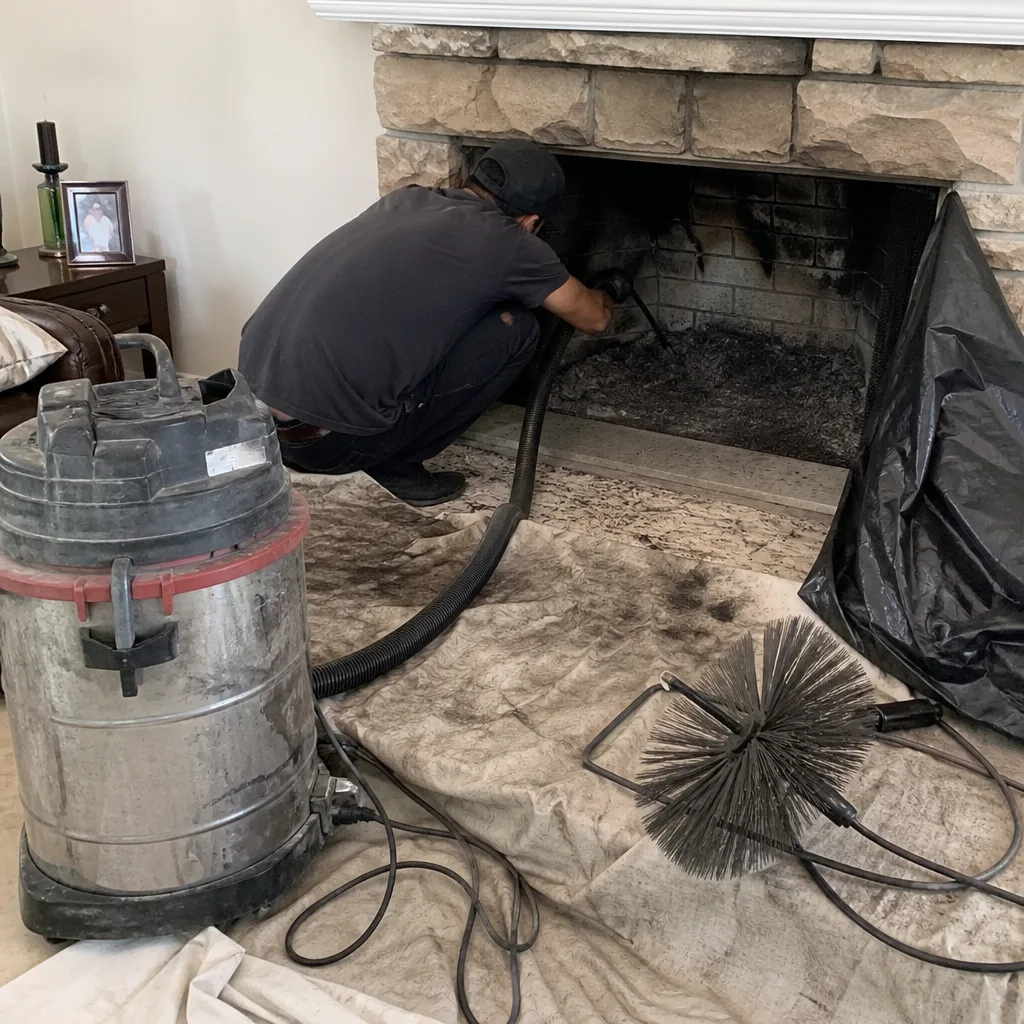 Before
 After
After